Congestion is Coming: Let’s Get Hudson County World Cup Ready Before It's Too Late
Imagine it's a Tuesday in June. You're trying to get to work. Your kid has a doctor's appointment in the afternoon. You need to pick up groceries on the way home. It's a normal day except that 80,000 soccer fans are also trying to move through your neighborhood on their way to MetLife Stadium.
A tsunami of bumper-to-bumper traffic is coming to North Bergen, West New York, Union City, Weehawken, and the rest of Hudson County this summer. And right now, we are not ready for it.
I know this firsthand. From my window in North Bergen, I can see MetLife Stadium. On a clear day, it sits right on the horizon, close enough to make out its shape, close enough to watch the fireworks light up the sky on concert and game nights. And yet, for me and for most of my neighbors, there is no practical way to get there without getting into a car, hailing a cab, or paying for a rideshare. A stadium I can see from my living room is effectively unreachable on foot, by bike, or by bus. That is the absurdity we are living with and the absurdity that the World Cup will expose for the entire world to see.
Hudson County sits at the front door of the 2026 FIFA World Cup. No county in America will feel it more directly. Fans from around the world will pour through our streets along Bergenline Avenue, down Boulevard East, through the Lincoln Tunnel corridor and they will do so on match days, on off days, in the mornings, and deep into the night. For the families and workers who live here, that means something specific and unpleasant: gridlock that turns a ten-minute drive into an hour. Diesel exhaust hanging over playgrounds. Horns blaring at midnight outside apartment windows. Kids breathing dirtier air. Seniors unable to cross the street. Deliveries stuck in traffic that doesn't move.
This isn't speculation. This is what happens when a major international sporting event descends on dense urban municipalities with no mobility plan. We've seen it before. And Hudson County, already one of the most congested, most densely populated counties in the United States, can afford it least.
The cruelest part? Most of our residents won't even have tickets to the matches. They will simply bear the cost of hosting the world, without any of the joy.
It doesn't have to be this way.
There is a clear, recent, and instructive model for how a city can absorb a massive sporting event without making its own residents suffer: the 2024 Summer Olympics in Paris.
Rather than surrendering her city to a flood of cars and chaos, Mayor Anne Hidalgo made a choice. She invested in moving people on foot, on bikes, on buses. Paris created express shuttle bus service running every minute along dedicated lanes. It increased Metro frequency citywide, with a 70% boost on the busiest routes. It added 34 miles of new bike routes, 30,000 bike shares, and 20,000 bike parking spaces. And critically, it pedestrianized major stretches of the city center, giving residents room to live their lives even as millions of visitors arrived.
The result was a city that didn't break. Parisians could still get to work, pick up their kids, and enjoy their neighborhoods and visitors moved efficiently, safely, and with far less impact on those who called the city home.
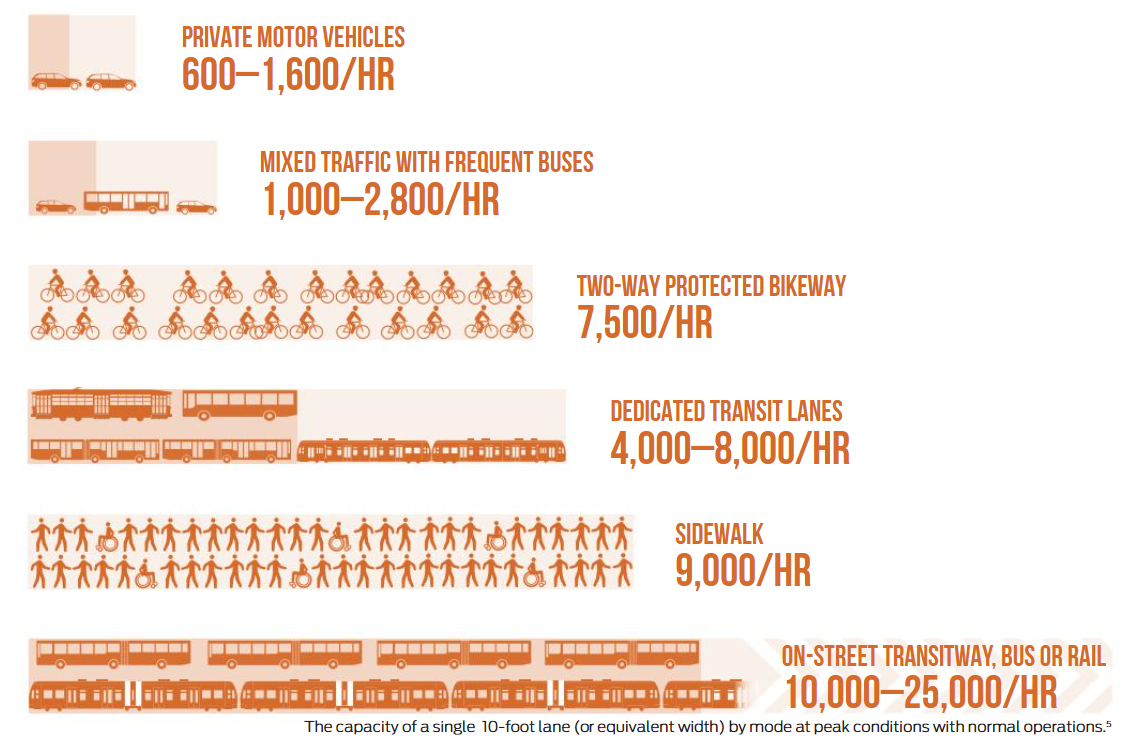
The solutions to moving people efficiently are not complicated.
Designate bus-priority lanes on JFK Boulevard and the key corridors feeding toward the stadium not just for the fans, but for the Hudson County residents who depend on those buses every single day.
Coordinate with NJ TRANSIT to run express shuttle service from our transit hubs (e.g. light rail stations, Journal Square) to MetLife, with service that runs as late as the celebrations do.
Work with the Port Authority to make the Lincoln Tunnel’s morning-only bus lanes run all day, including on weekends (a Lincoln Tunnel bus lane moves more than 10x as many people per hour as tunnel car lanes). Fans who have an easy, fast way to get to the stadium on a bus will not be sitting in their rental cars on your block.
Create temporary pedestrianized open streets around Bergenline and other high-density viewing areas on match days that will boost our local businesses and give residents a chance to join-in on the fun. Yes, this will be an inconvenience for some drivers but the alternative is those same streets turned into parking lots by fans who couldn't find another way. Give residents and visitors a pedestrian zone and you give everyone space to breathe, literally and figuratively.
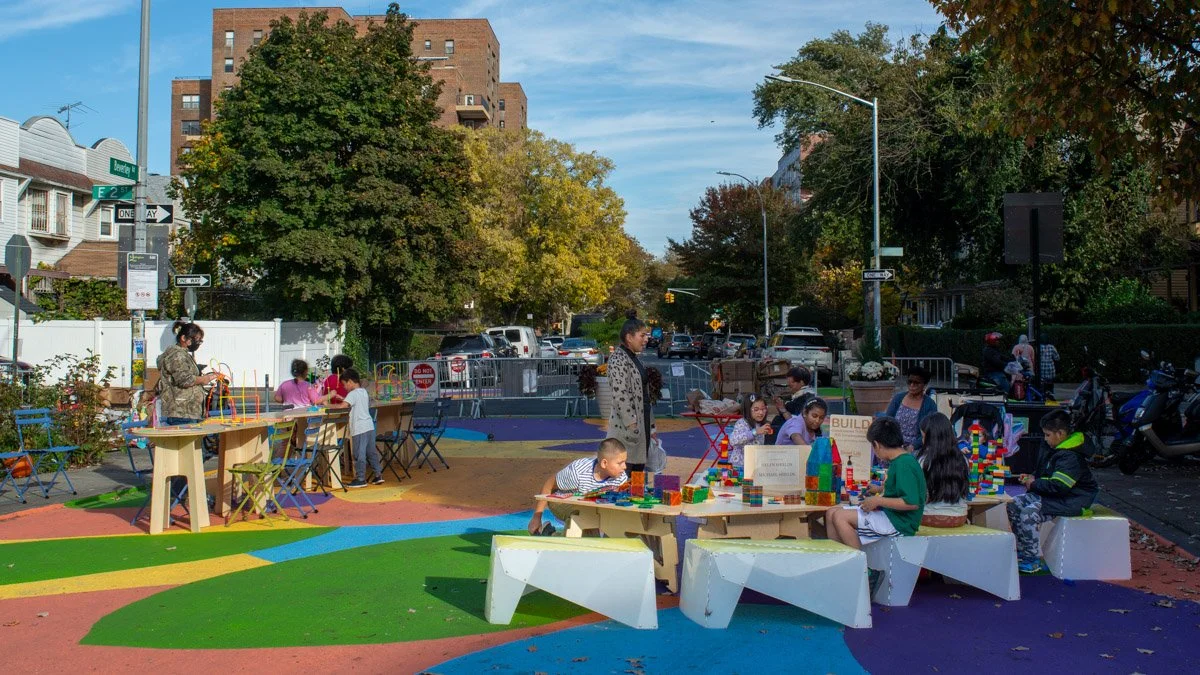
Photo Credit: Streetlab
Use quick-build materials to create safe and protected bike infrastructure connecting our densest neighborhoods to viewing areas and transit hubs Weehawken to Union City. North Bergen to West New York. These are short distances. Distances that become miserable by car when tens of thousands of visitors are on the road, and become pleasant on a protected bike lane.
The World Cup is an opportunity. Billions of eyes will be on this region. Hudson County has some of the most passionate, most diverse soccer communities in the world. We deserve to celebrate, not suffer.
But celebration requires preparation. Every day our local governments wait is a day closer to a summer where our residents pay the price for an event that was never planned with them in mind.
And here's the thing: once residents experience what it feels like to move through their neighborhood without gridlock, to bike safely to a viewing party, to hop a bus that actually comes on time, they won't want to give it back. The World Cup is the occasion, but the infrastructure should be the legacy. Bus priority lanes that work in July will work in October. Protected bike lanes that connect North Bergen to Union City for a soccer match will connect them for everything else that matters — school, work, the doctor, the park. Our towns are dense enough, our communities vibrant enough, and our needs are great enough that these solutions deserve to be permanent. This is also about something more fundamental than convenience: it's about survival. New Jersey has long aspired to Vision Zero — the elimination of all traffic deaths and serious injuries. Protected bike lanes, pedestrianized streets, and reliable transit service are exactly the interventions that save lives. The World Cup gives us the political opening to build them.
Let the World Cup be the moment Hudson County finally builds the streets its residents have always deserved.
The matches begin in just 71 days. The clock is ticking. Let’s meet this challenge and do something for both now and for beyond the World Cup.
Johan Andrade
President
Hudson County Complete Streets